The Saturday Courses

Open to anyone, the Saturday Courses are an excellent way of gaining more than would normally be offered in church on Sunday whilst being less demanding than a full-time theological course.

Applications will open shortly. If you would like to be notified when they are open, please email ETS Offices [email protected]

Saturday Courses Login

This area is where registered Saturday Course users can access all lectures and content. If you'd like to sign up, find out more and register below.

One Saturday a month, from September through to April, three lectures are delivered by visiting speakers. These lectures, which are also available to access online, are specially designed to stretch the Christian mind and deepen an understanding of God’s word. The course content covers Biblical Studies, Practical Theology, Christian Discipleship and Christian Doctrine.

Lectures in 2026/2027

Who is the Saturday Course for?

The Saturday Courses, which may be completed with or without essays, are of great benefit to anyone who has a longing to dig deeper into the gospel. 

They are also intended for office-bearers – to encourage them to learn how to approach theological, biblical, historical and pastoral issues and thus to develop a greater study of the word of God.

No prior qualifications are necessary – everyone is welcome.

The following awards are available in these courses:

Certificate in Theology

To qualify for a Certificate in Theology, the student is required to submit six essays (normally up to three essays each year).

Diploma in Christian Studies

This is a further course for those who have already gained their Certificate in Theology. To qualify for the Diploma in Christian Studies, the student is required to submit a further six essays (normally up to three essays each year).

And it does not stop there: for every six essays thereafter, a Diploma in Further Christian Studies will be awarded. Indeed, we have people who have been doing the course for 19 years!

When will the lectures take place?

In 2026/2027, the lectures will be delivered one Saturday a month on the following dates:

2026: 12 September, 10 October, 7 November, 5 December
2027: 9 January, 6 February, 6 March, 17 April 

The lectures will be delivered from the Chalmers Hall at ETS from 10am to 3.15pm.

Classes at venues other than Edinburgh and Stornoway will make their own arrangements for meeting.

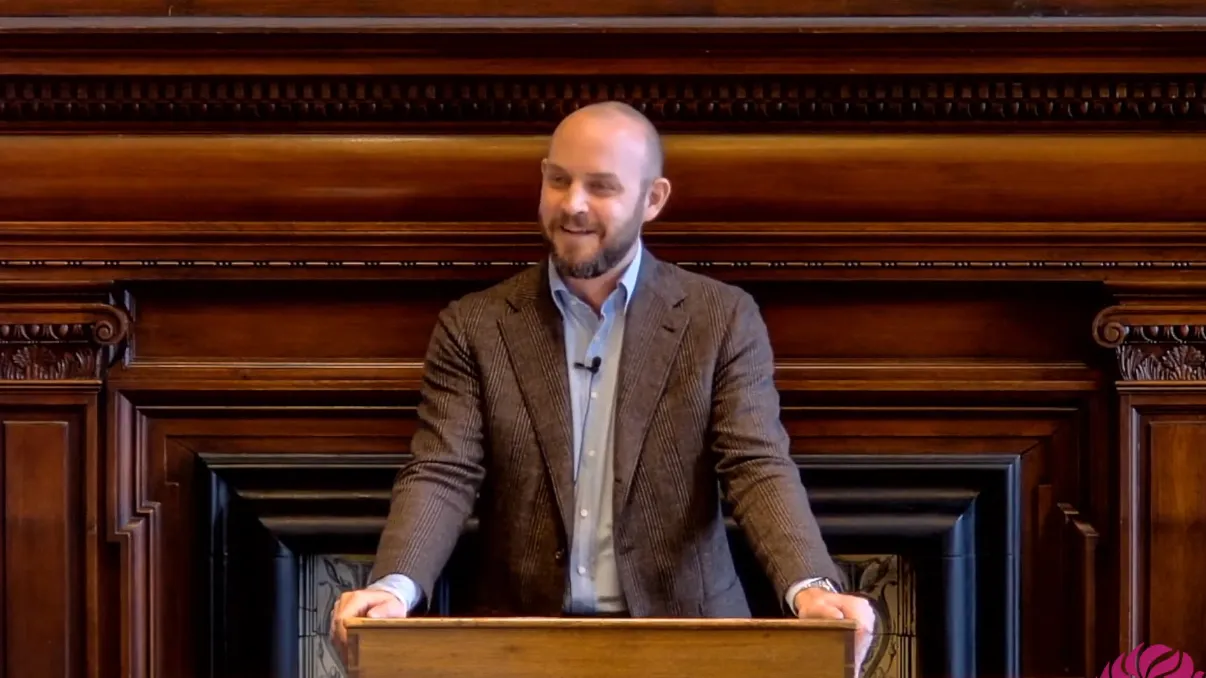
Watch this video, where John Angus MacLeod and Saturday Course student Megan Gray explain to prospective students what the Saturday courses involve.

Further Information

The Saturday lectures for each session are available online for enrolled students.

This facility allows students to watch the lectures live. It also makes it possible to keep the lectures on the website after delivery, so that you can access them as often as you wish until they are removed at the end of the course.

If you are a registered student on the Saturday Courses, you can access the lectures here using the login details that you have been provided with.

For those who are working towards course awards, here are the essay deadlines:

  • Practical Theology: 5 December 2026 (TBC)
  • Christian Doctrine: 9 January 2027 (TBC)
  • Biblical Studies: 6 February 2027 (TBC

Those who wish to qualify for the award of either the Certificate in Theology or the Diploma in Christian Studies will normally be required to submit three essays each year. Essay titles will be announced early in the course and students will receive guidance on the art of preparing and submitting written assignments.  Successful completion of 6 essays will lead to the Certificate in Theology award.  On successful completion of a further 6 essays, the Diploma in Christian Studies is awarded.  

Students who obtain Distinctions in at least 3 out of the 6 essays will receive a Certificate in Theology with Distinction. Similarly, students who obtain Distinctions in at least 6 out of the 12 essays will receive a Diploma in Christian Studies with Distinction.

And it does not stop there: for every six essays thereafter, a Diploma in Further Christian Studies will be awarded.  Indeed, we have people who have been doing the course for over 20 years!

All essays are to be submitted by email or via the Saturday Course website. Essays submitted by
email should be sent to Ruth Smith ([email protected])

Students who wish to attend without submitting the essays are welcome (and will pay a much lower fee).

However, essays offer more than a means of assessment; they are an important educational tool, stimulating students to think through important issues and to express themselves clearly.

Everyone is encouraged to rise to the challenge and every effort will be made to ensure that essay-marks are confidential.

  • Standard: £326 a year
  • Concessions (e.g. senior citizens): £100
  • Veterans (four or more years’ faithful attendance): £60
  • Full-time Students: £60
  • Auditors (no essays): £60
  • 18 and under: Free!

Due to the level of administration involved, payment by instalments is not possible.

On successful completion of the course, all students will be awarded a Completion of Studies certificate at the Seminary’s Annual Awards Ceremony in May.

In normal circumstances, groups meet to do the course at the venues below:

  • Edinburgh Theological Seminary
  • Stornoway Free Church

Classes at venues other than Edinburgh and Stornoway will make their own arrangements for meeting.

For further enquiries, please email the ETS Offices ([email protected]) or phone +44(0)131 376 3148.

Registration for 2025/2026 lectures will be available from June 2025.

Lectures in 2026/2027

Christian Doctrine

Beauty Ever Ancient, Ever New: The Triune God and the Christian Life

Lecturer: Moses Hoole

To be Christian is to be Trinitarian. Yet for many reasons, we treat the Trinity as a doctrine that intimidates rather than inspires our devotion. But the doctrine of the Triune God is not one among many. It is the foundation of all Christian teaching, and a vantage point from which to view the whole of creation. To explore any article of the faith, or any corner of life, is to be drawn back to the triune God. In this course, we will meet the Trinity in the Old and New Testaments, and consider each divine Person in turn: Father, Son, and Holy Spirit. We will consider who God is in and of Himself, and how He relates to the work of creation and redemption, by examining how the Church came to adore and articulate this great mystery in her common creeds and confessions. We will do so sitting at the feet of two formative theologians, Augustine of Hippo and John of Damascus, in conversation with Herman Bavinck. We will consider how we commune with the Triune God through Scripture, the sacraments, and prayer. The goal of this course is to cultivate a Trinitarian world and life view, so that we may glorify and enjoy God in our present sojourn and in the world to come.

Practical Theology

God’s Ultimate Purposes: Reading Ephesians Through the Lens of Mission

Lecturer: Alistair I. Wilson

‘Mission’ is a concept which permeates Scripture from beginning to end. Reading Scripture through the lens of ‘mission’ can highlight and connect biblical themes in a fresh way. Central to this approach is the conviction that God is working out his purposes and that every part of Scripture declares and accomplishes those purposes in some way. This course will lead you through Paul’s letter to the Ephesians, paying particular attention to how the letter speaks of God’s ‘ultimate purposes’. It will introduce you to a way of reading Scripture through the lens of mission which will, we hope, enrich your understanding of Ephesians and also provide an example of an approach which may be applied to other parts of the Bible.

Biblical Studies

1 & 2 Thessalonians: Living in Light of the Future

Lecturer: Will Lind

There are some parts of the Bible we tend to neglect and Paul’s letters to the Thessalonians are in that category. One of the main reasons for this is that they often speak of Christ’s return and even as Christians, this can leave us with questions and sometimes (if we’re honest!) a sense of unease. Rightly understood these two letters are packed with encouragement and help for people just like us. What hope do suffering and grieving believers have? What kind of leaders do our churches need? Who exactly is the man of lawlessness?! And what difference does it all make now? In these lectures we will put last things first and see what it means to be a church that lives in light of the future.